


Columnist John Moore has always loved cabooses. He painted this on canvas when he was around 11-years-old. Courtesy John Moore
My sister and I always looked for the caboose. That unmistakable red car at the rear of the train that held the men who always waved to us. We were drawn to the caboose because it seemed like the ultimate playhouse.
The train itself looked almost desolate. It headed down the tracks on its way to a destination unknown to us. But then the caboose appeared. The man in the window and the man in the raised lookout on top. What did the men in the caboose do? Why was there a caboose?
Ashdown, Arkansas, was a railroad town and folks who worked for the Santa Fe, Kansas City Southern, and other lines told us that the raised lookout, called a cupola, was a small cabin built on top of the car so the crew could see above the roofs of the freight cars. From there they could spot smoke, sparks, or other things that might spell trouble.
Today, the Union Pacific website and other online train-related depots carry much of the history of the little red railroad car.
The caboose began in the 1830s, when U.S. railroads built small shanties on flatcars or converted boxcars to give trainmen a place to work and rest. The cupola came along in the 1860s after one conductor realized he could see his train better from a raised perch built over the roof of his boxcar. That idea caught on quickly. The crew could now see the line of cars stretching ahead and spot problems before they became disasters.
Beyond lookout duties, the caboose served as living quarters. Crewmembers cooked on a small stove, slept in bunks, and kept their tools and supplies neatly stored.
Over time, that rough shelter evolved into the little red house on wheels that brought up the rear of nearly every freight train that passed by. One of its main purposes was to serve as a mobile office for the conductor. He kept waybills, load slips, and switching orders inside. A waybill was a handwritten record that traveled with each freight car. It listed what it carried, where it came from, and where it was headed.
The conductor, riding in the caboose, was the one in charge. He managed the paperwork, the car counts, and the weight limits that kept the train balanced and safe.
The engineer drove the locomotive, but the conductor made the decisions that kept everything running smoothly. The brakemen handled manual work and watched for trouble, while the flagman protected the rear.
When I attended college, there was a retired red caboose that had been turned into a business in Texarkana. It was parked right beside Summerhill Road. I used to stop there often.
The man who ran it was thin, with a handlebar mustache, and always had a pipe in his mouth. He sold pipe tobacco inside that caboose, blending it himself behind a small counter. I’d climb the steps and walk through the old caboose door, where the smell of sweet smoke filled the air. He’d mix a custom blend and pack it in a sealed pouch, which I’d later puff on from my briar pipe.
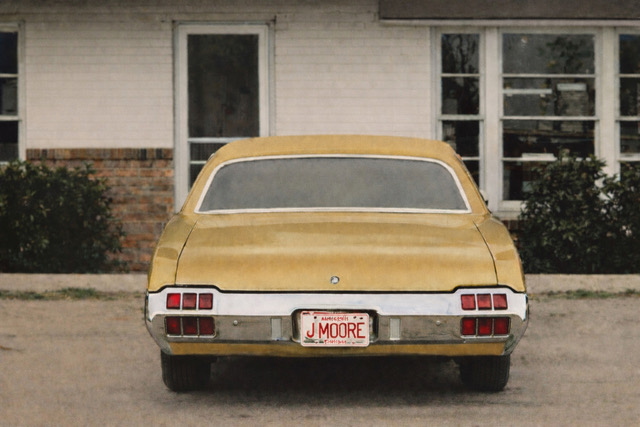
I’d smoke it when I drove my 1972 Oldsmobile Cutlass Supreme, often while watching trains run along the highway on either side of me. If the train had a caboose, I’d look for the men inside.
But by the 1980s, most railroads began phasing out the caboose. The invention of automatic air brakes made manual braking unnecessary. Roller bearings replaced the old friction types. Trackside detectors and signal systems took over most of the inspection duties once done by human eyes.
The final equipment blow came from a small box attached to the rear coupler that monitored brake pressure and motion, sending that information to the engineer up front. New labor agreements shortened crew hours and made onboard living quarters unnecessary.
Combined, they sent the caboose rolling down the tracks into history. By the mid-1980s, the caboose had nearly vanished. A few survived on short lines or tourist trains, but most ended up in museums or parks.
Now when I see a passing train, I look at the end where the caboose used to be and I wish that it was still there, and that the men who lived and worked in those rolling, red homes were still inside, firing the wood stove that perked their coffee and cooked their meals.
But these days, things that once mattered are gone due to streamlining and downsizing. Like the little, red caboose, which used to be at the end of every train.
Kids today will never know the joy of waving at the men in the caboose. But for my generation, we waved all the way to the end of the line.
By John Moore, author, Puns for Groan People and Write of Passage: A Southerner’s View of Then and Now Vol. 1 and 2, are available on his website
TheCountryWriter.com, where you can also send him a message.
For more stories about the Farmersville community see the next print, or digital edition of The Farmersville Times. Subscribe today and support local journalism.






0 Comments