


Columnist John Moore snapped this photo of his back pasture. A place he now calls home, and wishes he’d called home it sooner.Courtesy John Moore
I grew up in the far southwest corner of Arkansas. Nature drove the speed of life, and the towns breathed at an unhurried pace. Even now when I return there, the clock seems to slow and things just don’t move as fast.
The countryside in between each community was stitched together by gravel roads, fields, and family ties. You could drive for miles without seeing anyone, but when you did they weren’t a stranger.
For all who grew up in a similar setting, places like my hometown of Ashdown seemed like the really, big city. Which is funny, because Ashdown was only 3,000 people (it basically still is 3,000 people).
When you grow up in the country, it never washes off of you. But for a while I tried to wash it off, and actually thought I had.
Mom’s family lived near Fomby and Red Bluff. Places so small that if someone knows where they are, you know they’re from there. Dad’s folks were from Foreman, where the preaching was loud and regular, and the smoke from the forges meant business was booming.
My mother’s father was a practical man. During the Great Depression, he was one of the few in the area who owned a truck, and that meant he had a way to earn money. He delivered ice to people’s homes, hauling the right size block into the house and into their icebox, which was what people used to preserve their food before electricity.
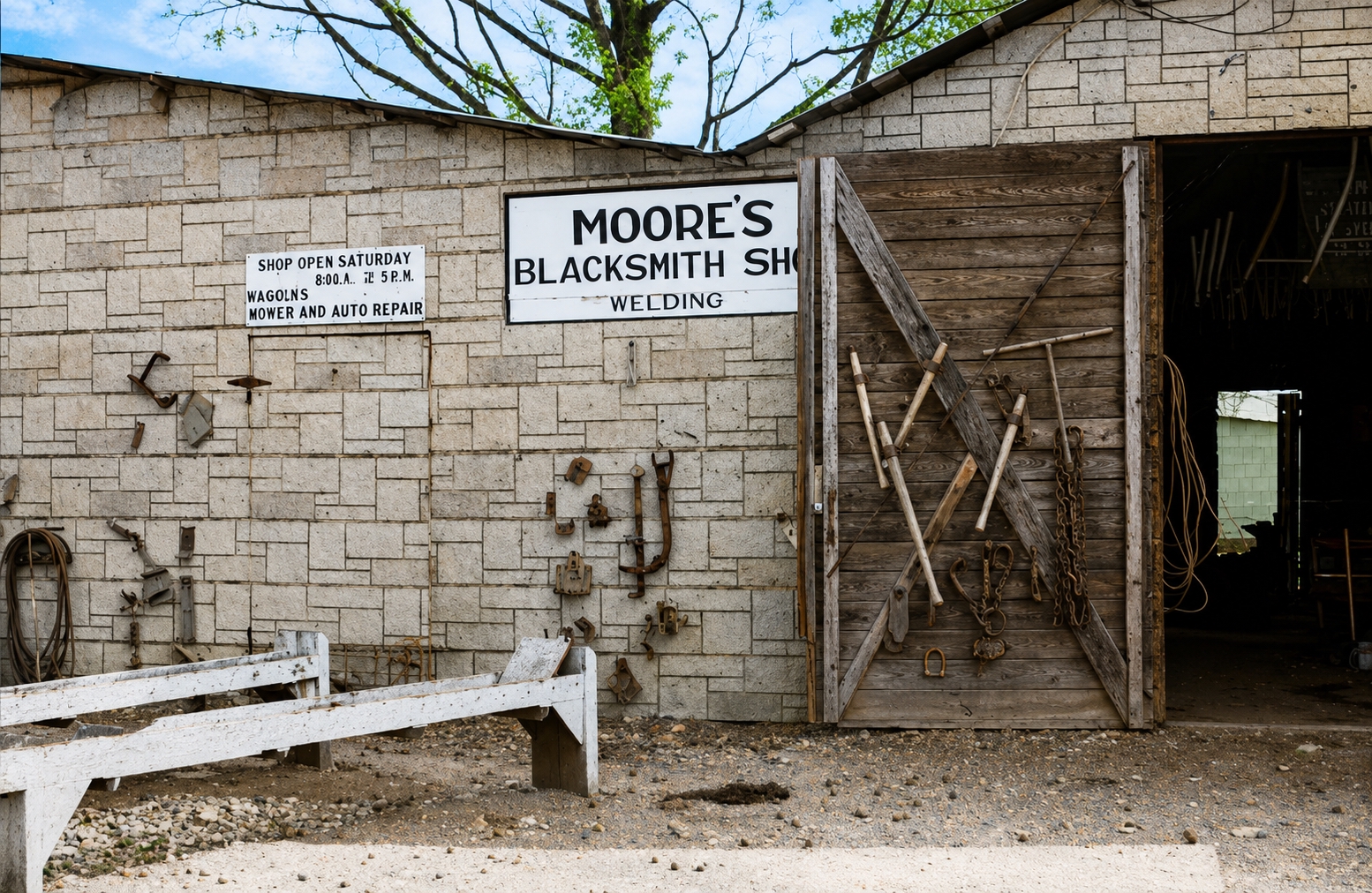
Dad’s father and grandfather were blacksmiths. They didn’t just repair things, they created them. People didn’t have enough money to buy what they needed, so the blacksmith made their plow shears, repaired their rakes and shovels, and fixed their wagons.
I was cut from the cloth of hard-working, self-reliant people who made their living with their hands and their wits. And yet, when I was young, I wanted something entirely different.
The country felt small to me. Confining.
I wanted the bustle, the lights, and the sense that things were happening. I wanted the big city.
So, at 18, I left.
I packed up and walked into the noise and rush of urban life, staying there for years; chasing great opportunities and experiences. I built a life in the middle of all that motion. For a long time, I thought that was what I wanted, and in some ways, it was. There’s a thrill to the city, a constant sense of being part of something larger.
But I never stopped thinking about the country. I’d remember the way the air smells after a rain when it’s heavy with the scent of pine. I’d picture a hayfield turning gold in the evening light, or the slow way a summer day stretches out when you’re a child with nothing but time.
The older I got, the more those thoughts turned into a pull.
I asked my wife to find us a, “House on 10 acres, at the end of a dead-end road, in the middle of nowhere.” A tall order, but she eventually found it. Exactly what I had requested.
We sold our city place and moved. And something happened in the process. We both felt ourselves returning to who we really were. Who we had been all along.
There’s a calm to the country that’s impossible to fake. You can feel it in the mornings when the mist hangs low over the pasture, and the only sound is nature. You can see it in the evenings when the sky turns to orange, red, and sometimes purple, before it fades into the kind of dark you can only find far from city lights. A sky of stars, painted by God’s own hand.
The country doesn’t just give you quiet; it gives you space—to think, to work, to breathe. The city taught me a lot about drive and ambition, about seizing opportunities. But the country taught me about roots. My roots. My people’s roots. The roots the Good Lord planted before I was.
It gave me back a connection to the people who came before me—my grandfather with his ice truck, my other grandfather and great-grandfather with their anvils and forges.
In the end, it’s all of our combined experiences that bring clarity, but it’s home – our true home – that bring peace.
When home calls, you can only ignore it for so long before you find yourself packing up and heading back.
And the sooner you go home, the longer you can enjoy where you were always meant to be.
By John Moore, author, Puns for Groan People and Write of Passage: A Southerner’s View of Then and Now Vol. 1 and 2, are available on his website TheCountryWriter.com, where you can also send him a message.
For more stories about the Farmersville community see the next print, or digital edition of The Farmersville Times. Subscribe today and support local journalism.









0 Comments