

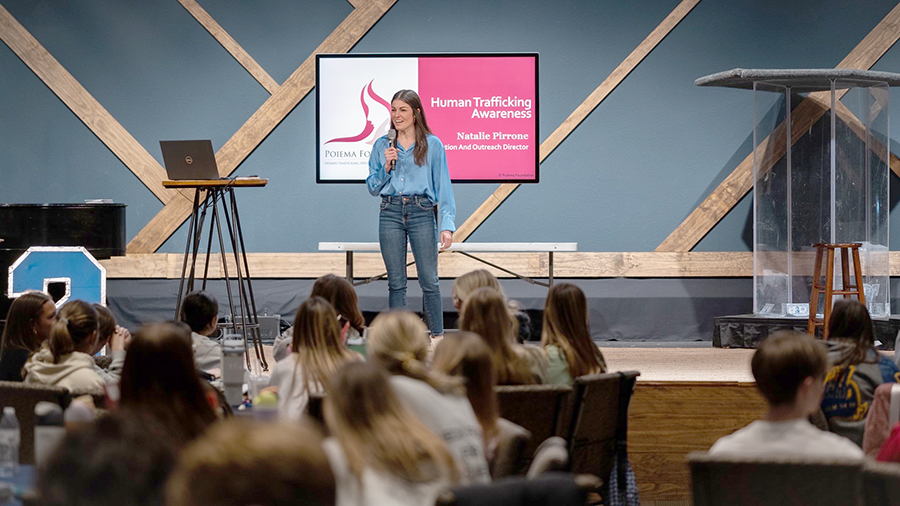
As part of Human Trafficking Prevention Month, the Poiema Foundation is hosting a Training Summit on Jan. 17 designed to help participants better understand what human trafficking looks like, how vulnerability is created and how community members can be part of prevention efforts. Courtesy photo
As January marks Human Trafficking Prevention Month, the Texas Department of Licensing and Regulation is highlighting the role its employees and licensed professionals play in identifying and preventing human trafficking across the state.
TDLR regulates several industries that can be vulnerable to labor or sex trafficking, including massage therapy, cosmetology, nail salons and certain health professions. Because of that oversight, agency officials say inspectors and licensees are often among the first to encounter individuals who may be experiencing trafficking.
According to the agency, trafficked individuals may be brought into regulated health settings for medical care or into beauty-related businesses where traffickers attempt to control or alter their appearance. In response, TDLR conducts periodic, unannounced inspections of massage establishments and cosmetology salons and aggressively pursues administrative penalties against both licensed and unlicensed providers found to allow sexual activity on business premises.
All TDLR employees who routinely interact with licensees receive training on how to recognize and respond to potential trafficking situations. The agency also works with local, state and federal law enforcement, as well as nongovernmental organizations, to investigate suspected illicit massage businesses and possible trafficking at nail salons.
Those efforts have resulted in significant enforcement action. During the first two years following the passage of House Bill 3579 in the 88th Texas Legislature, TDLR issued 51 emergency orders that ultimately led to the permanent revocation of licenses for 63 massage establishments suspected of involvement in human trafficking.
In addition to enforcement, education remains a key component of prevention efforts statewide. Many TDLR licensees are required to complete approved human trafficking prevention training before renewing their licenses. The requirement affects approximately 400,000 cosmetologists and barbers, along with more than 83,000 health-care professionals, including massage therapists, athletic trainers, dietitians, midwives, podiatrists and speech-language pathologists.
Local advocacy organizations also play a critical role in prevention through community education. Rockwall-based Poiema Foundation focuses on equipping individuals with the knowledge needed to recognize trafficking and reduce vulnerability through training and outreach.
“Human trafficking does not always appear as we expect, and its indicators are often subtle or easily overlooked,” Natalie Alonzo, Poiema’s education and outreach director, said. “For this reason, we are deeply grateful to licensing agencies that prioritize and require training for frontline workers, equipping them to recognize trafficking and respond appropriately when a patient may be a victim.”
Education is central to Poiema’s mission, with programming that includes training for health-care workers and presentations at churches, businesses and schools. The foundation’s flagship course, Human Trafficking 101, covers domestic sex trafficking and is offered to the public both in person and through monthly Zoom sessions. The organization also provides Internet Safety training, addressing the risks online platforms can pose to minors. The course is taught by Alonzo, along with members of the Poiema team.
As part of Human Trafficking Prevention Month, Poiema is hosting a Training Summit on Jan. 17 designed to help participants better understand what human trafficking looks like, how vulnerability is created and how community members can be part of prevention efforts. Additional information and registration details are available at poiemafoundation.org.
TDLR encourages anyone who suspects human trafficking to report it. Tips can be made to the National Human Trafficking Hotline at 1-888-373-7888 or by texting HELP or INFO to BeFree (233733). In emergencies or situations involving immediate danger, authorities should be contacted by calling 911.
For more stories about the Farmersville community, see the next print or digital edition of The Farmersville Times. Subscribe today and support local journalism.







0 Comments